

Dengue is one of the most common mosquito-borne viral diseases affecting millions of people every year, especially during the rainy and post-monsoon seasons
Dengue is one of the most common mosquito-borne viral diseases affecting millions of people every year, especially during the rainy and post-monsoon seasons. Although dengue can be serious if left untreated, the good news is that it is preventable, and early diagnosis significantly reduces the risk of complications. Public awareness plays a vital role in controlling the spread of dengue and protecting families from this dangerous disease.
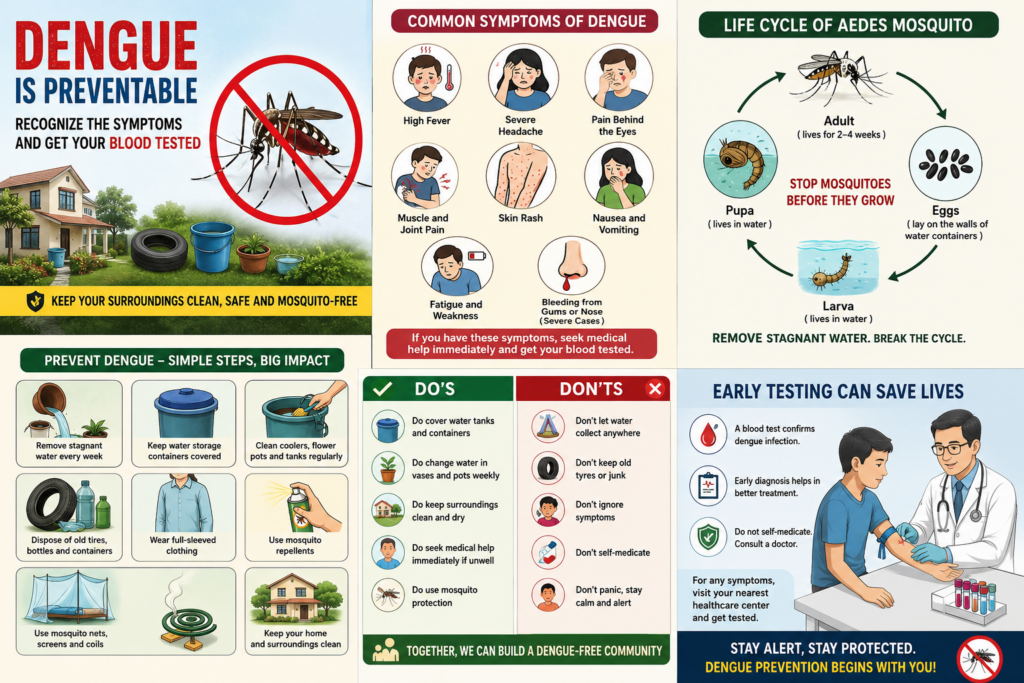
The image above highlights an important message: “Dengue can be prevented. Recognize the symptoms and get your blood tested.” Understanding the warning signs and taking timely action can save lives.
What is Dengue?
Dengue is a viral infection caused by the dengue virus and transmitted through the bite of an infected Aedes aegypti mosquito. Unlike many other mosquitoes, the Aedes mosquito is most active during the daytime, particularly in the early morning and late afternoon. These mosquitoes breed in clean, stagnant water commonly found in flower pots, buckets, discarded tires, coolers, water tanks, and other containers around homes.
Since there is no specific cure for dengue, prevention and early medical care remain the best ways to fight the disease.
Common Symptoms of Dengue
Dengue symptoms usually appear 4 to 10 days after the mosquito bite and can range from mild to severe. Some of the most common symptoms include:
- High fever (often above 39°C or 102°F)
- Severe headache
- Pain behind the eyes
- Muscle and joint pain
- Skin rash
- Nausea and vomiting
- Fatigue and weakness
- Bleeding from the gums or nose in severe cases
If you experience these symptoms, especially during the dengue season, visit your nearest healthcare facility immediately and get a blood test. Early diagnosis allows doctors to monitor platelet counts and provide appropriate treatment before complications develop.
How Dengue Spreads
Many people believe that dengue spreads directly from one person to another, but this is not true. Dengue spreads only through the bite of an infected Aedes mosquito.
The mosquito becomes infected after biting a person who already has dengue. It can then transmit the virus to other healthy individuals through subsequent bites.
Simple Ways to Prevent Dengue
Preventing mosquito breeding is the most effective way to reduce dengue transmission. Follow these preventive measures:
- Remove stagnant water from your surroundings every week.
- Keep water storage containers tightly covered.
- Clean coolers, flower pots, bird baths, and water tanks regularly.
- Dispose of old tires, bottles, and containers that can collect rainwater.
- Wear full-sleeved clothing, especially during the daytime.
- Apply mosquito repellents on exposed skin.
- Use mosquito nets, window screens, and mosquito coils or vaporizers.
- Keep your home and surroundings clean.
Community participation is equally important. Every household should actively eliminate mosquito breeding sites to reduce the overall mosquito population.
When Should You Seek Medical Attention?
Immediate medical attention is necessary if a person with dengue develops:
- Persistent vomiting
- Severe abdominal pain
- Difficulty breathing
- Continuous bleeding from the gums or nose
- Extreme weakness or dizziness
- Restlessness or confusion
These may indicate severe dengue, which requires urgent hospitalization.
Dengue Testing Saves Lives
A blood test is the only reliable way to confirm dengue infection. Government hospitals and designated healthcare centers provide dengue testing facilities. Early testing helps healthcare professionals monitor the patient’s condition and initiate timely supportive treatment, greatly reducing the risk of severe complications.
Avoid self-medication, especially painkillers such as ibuprofen or aspirin, as they may increase the risk of bleeding. Always consult a qualified healthcare provider before taking any medication.
Community Responsibility
Dengue prevention is not only the responsibility of health authorities but also of every citizen. Schools, workplaces, local communities, and families must work together to eliminate mosquito breeding sites and spread awareness about prevention.
Children and elderly individuals are particularly vulnerable, so extra care should be taken to protect them from mosquito bites.